## Table of Contents
– [Why Follow-Up Timing Decides Repeat Revenue](#why-follow-up-timing-decides-repeat-revenue)
– [The Problem: Manual Follow-Up Breaks at the Front Counter](#the-problem-manual-follow-up-breaks-at-the-front-counter)
– [The Solution: Automated Treatment-Interval Messaging](#the-solution-automated-treatment-interval-messaging)
– [Step 1: Capture Treatment Data at the Counter](#step-1-capture-treatment-data-at-the-counter)
– [Step 2: Send the 48-Hour Comfort Check-In](#step-2-send-the-48-hour-comfort-check-in)
– [Step 3: Set Recall Timing by Treatment Type](#step-3-set-recall-timing-by-treatment-type)
– [Step 4: Rebook with a Single-Reply Link](#step-4-rebook-with-a-single-reply-link)
– [Step 5: Keep the Clinic Visible with Wallet Passes](#step-5-keep-the-clinic-visible-with-wallet-passes)
– [Step 6: Report on Visit Gaps, Not Open Rates](#step-6-report-on-visit-gaps-not-open-rates)
– [Implementation Checklist: A 90-Day Post-Treatment Protocol](#implementation-checklist-a-90-day-post-treatment-protocol)
– [Conclusion: Turn One Visit Into a Scheduled Series](#conclusion-turn-one-visit-into-a-scheduled-series)
> Set the follow-up to fire from the treatment record rather than from memory. When the clinician closes a visit, the counter tablet stamps the procedure type, practitioner, and date. The platform then sends a 48-hour comfort check-in, a treatment-specific recall timed to the clinical interval (day 100 for neuromodulators, month 6 for hygiene, day 28 between laser sessions), and a single-reply rebooking link. Every message names the location and the next open slot. The front desk stops chasing and starts confirming.
## Why Follow-Up Timing Decides Repeat Revenue
A dental spa earns on the second, fourth, and sixth visit. A neuromodulator appointment carries a clinical window of roughly 90 to 120 days, hygiene recall sits at six months, and a laser course compresses the interval to four weeks between sessions. The treatment plan already contains the schedule. The counter visit captures the data that makes that schedule automatic, and [automated foot traffic re-engagement and win-back messaging](https://loyaltynation.io/platform/foot-traffic-triggers) turns the clinical calendar into queued messages that fire on the date instead of on someone’s reminder app.
Clinics that run this on paper lose the thread in predictable places. The coordinator makes calls in the gaps between patients, yesterday’s treatment list gets transcribed at 6pm, and a single Saturday no-show pushes the whole week sideways. Every dropped follow-up becomes a visit gap of 30, 60, or 120 days in a business that paid acquisition costs to create the first appointment. Automation repairs the handoff between the treatment room and the booking calendar.
## The Problem: Manual Follow-Up Breaks at the Front Counter
An aesthetic clinic front desk handles check-in, consent forms, payment plans, product retail, and inbound calls while a treatment room turns over. Post-treatment follow-up lands on the same person, at the same counter, in the same ten-minute window. A follow-up call takes four to six minutes when it connects, and it frequently reaches voicemail because most clients are at their own jobs during clinic hours.
Paper-based recall depends on a name being written legibly and read correctly weeks later. Treatment details live in the practice management system while the follow-up list lives in a notebook or a spreadsheet one coordinator maintains. When that coordinator takes leave, the list stops moving.
The commercial cost appears as visit gaps. A client who received a toxin treatment and never got a nudge at day 100 often returns at month nine or later, once a friend mentions the lines coming back. A hygiene patient who misses the six-month reminder drifts to fourteen months. Both cases look like churn in the reporting and behave like a scheduling failure at the counter.
Multi-location clinics hit a harder version of the same problem. Each site keeps its own list, uses its own wording, and applies its own judgement about when to call. A client who visits the downtown location for a facial and the suburban location for injectables receives two unrelated experiences and no consistent reason to return to either one.
## The Solution: Automated Treatment-Interval Messaging
The build runs on three data points: who the client is, what was performed today, and when the next clinical touchpoint falls. The counter tablet collects the first two in about eight seconds. The platform calculates the third from a rule table the clinic controls, then queues the messages, then books the appointment.
### Step 1: Capture Treatment Data at the Counter
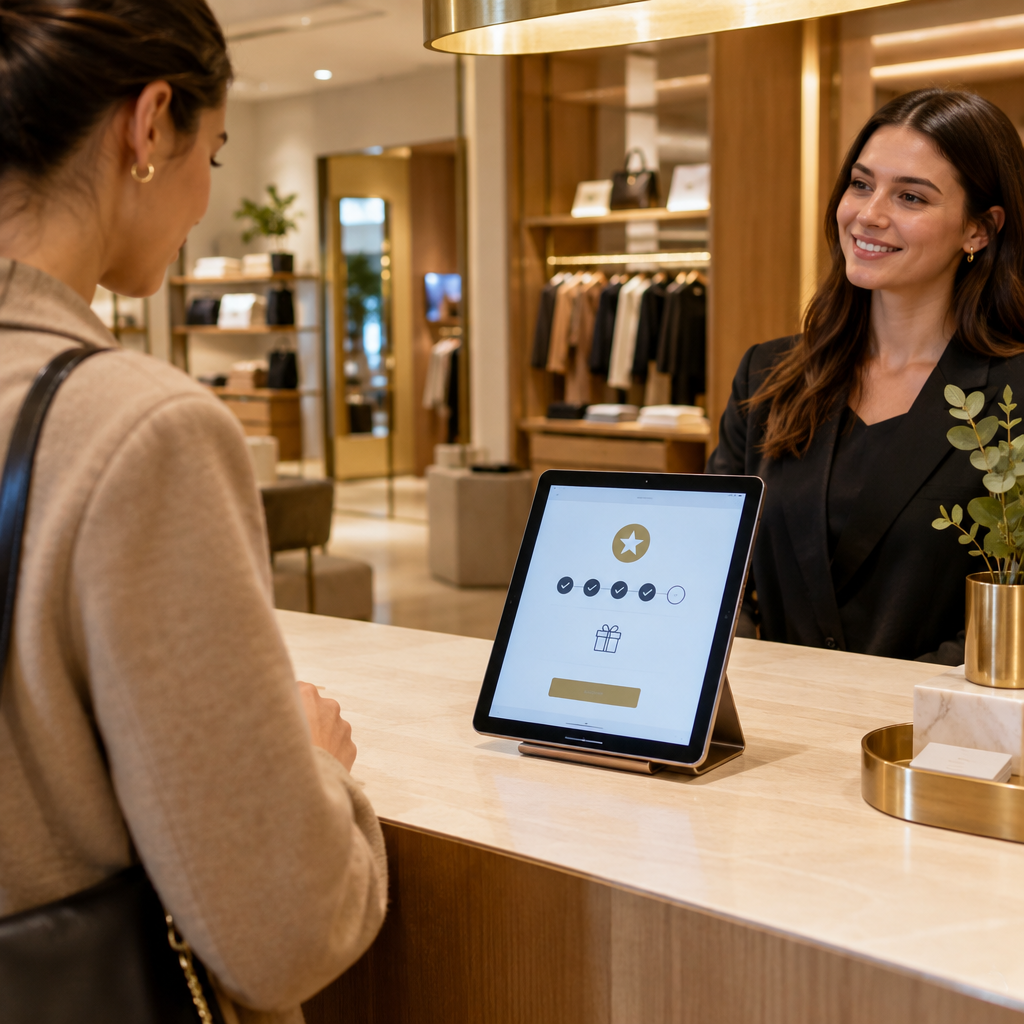
Ask for a mobile number with explicit SMS consent at intake, and log the procedure code when the clinician closes the visit. A counter tablet facing the client handles the consent screen, the digital wallet pass install, and the appointment confirmation in one pass. Build the message flow on structured fields: treatment type, practitioner, location, and session number inside a course. Free-text notes break triggers. Series work needs the session number most, since a client on session two of six receives different messaging than a client on session six of six.
### Step 2: Send the 48-Hour Comfort Check-In
The first message goes out two days after treatment, when swelling, sensitivity, or tenderness peaks and questions surface. Keep it to one question and one action: a reply-based check where 1 means comfortable and 2 means a call is welcome. Flagged replies route straight to the coordinator queue with the client’s name and procedure attached. This message does genuine clinical service work and produces the highest reply rate in the sequence. Set a business-hours send window so replies arrive while staff can answer them.
### Step 3: Set Recall Timing by Treatment Type
Recall timing follows clinical logic, so the platform stores it as a rule per procedure. Useful starting values:
– Neuromodulators: day 100, inside a 90 to 120 day window
– Dermal filler: month 6 review, month 9 to 12 top-up
– Chemical peel course: day 21 for the next session
– Laser series: day 28 between sessions
– Hygiene and dental recall: month 6
– Skin membership: monthly
Recalls go out seven days before the target date with two bookable slots attached. The recall mechanic matches appointment-recall logic used across other counter-based trades, which [barbershop client retention: automated SMS appointment recalls](https://loyaltynation.io/resources/barbershop-client-retention-automated-sms) breaks down in detail. The clinical difference is that the interval comes from a treatment protocol, so the rule table needs sign-off from the clinical lead before it goes live.
### Step 4: Rebook with a Single-Reply Link
The rebooking link opens a booking page pre-filled with location, practitioner, and treatment, showing two or three slots inside the recall window. One tap confirms. Reply-to-book keeps the path short for clients who prefer texting over tapping. Send-time matters in this category: cosmetic clinic clients respond best between 10am and 1pm and again from 6pm to 8pm on weekdays, and Tuesday through Thursday outperforms Friday for elective bookings. [Cinema loyalty marketing: automating Tuesday foot traffic via SMS](https://loyaltynation.io/resources/cinema-loyalty-program-sms-marketing) shows how daypart and day-of-week sequencing concentrates bookings into quiet periods, and the same method fills a clinic’s soft Tuesday afternoon.
### Step 5: Keep the Clinic Visible with Wallet Passes
Apple Wallet and Google Wallet passes keep the treatment plan on the lock screen without an app install. The pass carries the next appointment, the session count, the location address, and a live booking link that refreshes when the client rebooks. For series work this removes the arithmetic: a client opens her phone and reads session 3 of 6. Passes get opened in the parking lot on arrival, which is the moment to surface a same-day add-on or a retail offer at the counter.
### Step 6: Report on Visit Gaps, Not Open Rates
Track four numbers per location: median days between visits by procedure, share of clients rebooked before they leave, share recovered by recall message, and revenue per recall batch. A batch of 400 clients that produces 46 bookings at a $180 average ticket returns $8,280 against a few dollars of messaging cost. Review the rule table quarterly, because a protocol change alters the interval and stale intervals send the wrong message at the wrong time.
## Implementation Checklist: A 90-Day Post-Treatment Protocol
| Timing | Trigger | Message content | Owner |
|—|—|—|—|
| Day 0, at the counter | Clinician closes the visit | Consent capture, wallet pass, appointment card | Front desk |
| Day 2, 10am to 1pm | Treatment record created | Comfort check-in with reply codes | Automated |
| Day 3, reply code 2 | Client requests a call | Coordinator callback within 4 business hours | Coordinator |
| Day 7, no reply | No response to check-in | Short aftercare follow-up | Automated |
| Day 21 | Peel course, session 1 | Next-session booking link | Automated |
| Day 28 | Laser series, session 2 of 6 | Interval reminder with slot options | Automated |
| Day 60 | No future appointment on file | Early rebooking offer | Automated |
| Day 93 | Neuromodulator record | Recall with two bookable slots | Automated |
| Day 100 | No booking after recall | Coordinator call plus SMS fallback | Coordinator |
| Month 6 | Hygiene recall due | Six-month recall with booking link | Automated |
| Month 9 to 12 | Visit gap exceeds protocol | Win-back message with location offer | Automated |
Launch sequence for the first 30 days:
1. Export procedure codes and current recall intervals from the practice management system.
2. Map each code to one recall rule and confirm the intervals with the clinical lead.
3. Write the four message templates: comfort check-in, interval recall, rebooking link, win-back.
4. Train the front desk on the tablet consent flow and the flagged-reply queue.
5. Run one location for two weeks, compare rebooking rate against the paper process, then roll out.
## Conclusion: Turn One Visit Into a Scheduled Series
Aesthetic revenue compounds across appointments. The clinic that books visit two before the client reaches the parking lot holds a measurable advantage over the clinic that waits for an inbound call. Automated post-treatment messaging converts the treatment record into a dated queue: a comfort check-in at 48 hours, a clinical recall at the protocol interval, a rebooking link that opens with the right slots already loaded, and a reporting view that shows exactly where visit gaps open up by practitioner and by location.
Start with the counter. Consent, procedure code, and wallet pass install take under a minute and unlock the entire sequence. From there, the rule table does the work on every shift, including the busy ones.
**Next step:** book an in-store counter demo to see the tablet consent flow and the recall queue running against your own procedure list, or calculate your repeat foot traffic revenue gains using your current average ticket and visit frequency. Bring last month’s new-client count and your no-show rate; the model will show the appointments sitting inside the recall window right now.
