- Quick Answer
- The Core Challenge
- The Step-by-Step Solution
- Step 1: Map the Wholesale-to-Retail Handoff
- Step 2: Issue Digital Wallet Passes at the Bean Shelf
- Step 3: Sync Every Counter Terminal to One Customer Record
- Step 4: Build a Bean-First Reward Ladder
- Step 5: Unify Roastery and Cafe Locations Under One Dashboard
- Step 6: Automate Reorder and Visit-Gap Triggers
- Step 7: Report on Wholesale Lift per Cafe Account
- Next Steps & Implementation
Quick Answer
Coffee roasters connect wholesale cafe counters to retail bean buyers by placing a counter tablet at the register that issues a digital wallet pass with every bag of beans sold, then tracking those bag purchases next to drink visits inside one customer profile. The roastery gains visibility into which cafe sells which SKU to whom, the cafe gains a reason for that buyer to return, and the buyer collects rewards that redeem at both the espresso bar and the retail shelf. This runs on the same retail POS loyalty and counter terminal integration layer that already handles drink-based visit tracking, so a roastery adds a bean channel without adding hardware or staff steps.
The Core Challenge
A roastery sells wholesale to a cafe, and the cafe sells retail bags to the public. Between those two transactions sits a data black hole. The roastery knows how many kilos shipped to each account; it does not know who carried the bag home, how often that person returns, or whether they bought the same origin twice. The cafe knows the face at the register; it does not know that the same person bought a bag three weeks ago and skipped a visit last month.
Paper punch cards and plastic loyalty cards make this worse. Staff forget to hand them over during a rush. Buyers leave them in a jacket pocket. A card that stays in a wallet forever never gets scanned, so no visit gets recorded, and the roastery’s wholesale account manager walks into a quarterly review with no evidence that the retail shelf produced repeat traffic.
The operational cost shows up in three places. First, front-counter speed drops when a cashier digs for a stamp while a line builds. Second, retail bag buyers drift to a grocery shelf or a subscription box because nothing ties them to the cafe that introduced the coffee. Third, roasteries price wholesale contracts on gut feel rather than on the foot traffic their beans actually generate for the account.
The Step-by-Step Solution
Step 1: Map the Wholesale-to-Retail Handoff
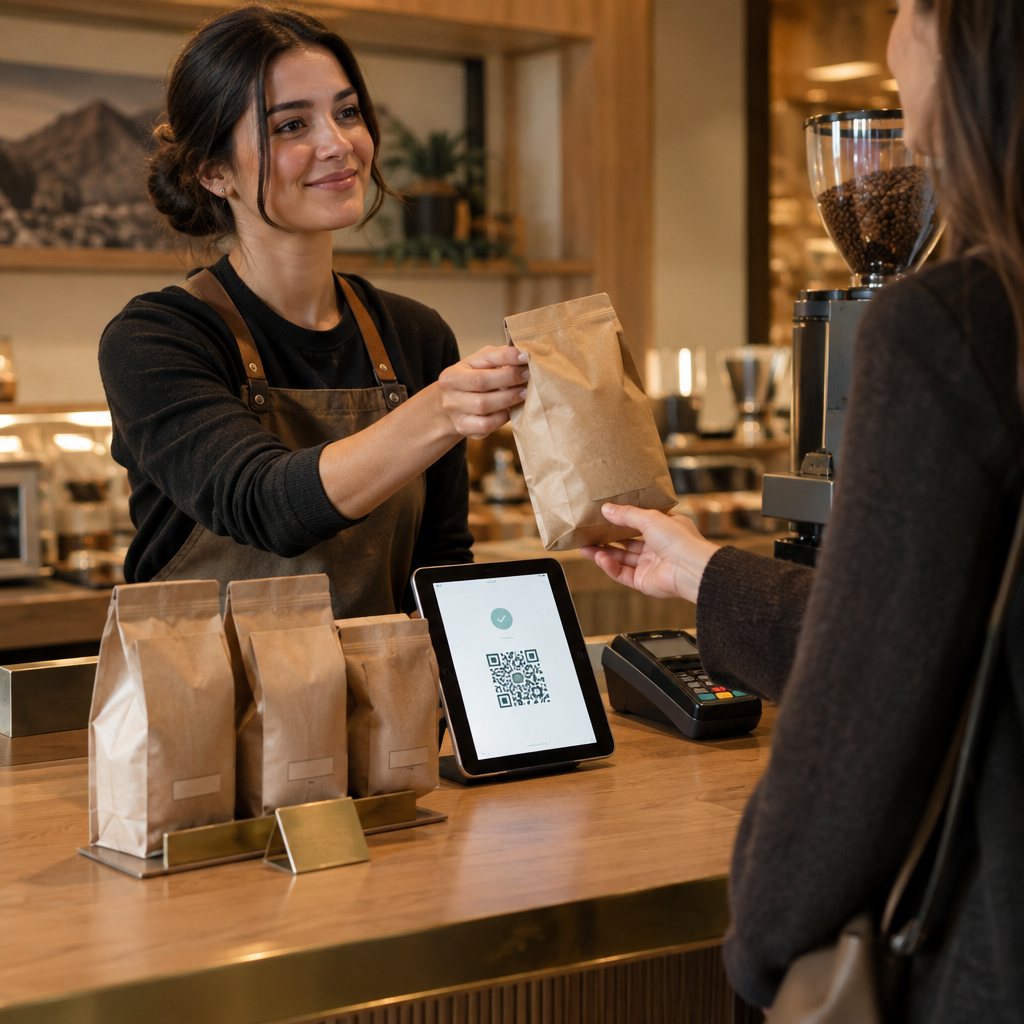
Sit with the cafe owner and trace one bag from the roastery van to the customer’s kitchen. Identify the exact moment staff can capture a phone number or a wallet pass without slowing the line: usually after the payment taps through and before the bag goes into a tote. Write out that sequence for a busy Saturday and for a quiet Tuesday, because staffing differs and the capture step has to survive both. Confirm which POS the cafe runs, which card reader sits on the counter, and whether the tablet can share counter space with the card terminal.
Step 2: Issue Digital Wallet Passes at the Bean Shelf
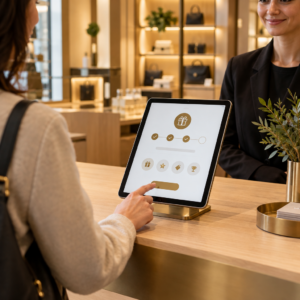
Replace the punch card with an Apple Wallet or Google Wallet pass generated in two taps on the counter tablet. The cashier taps the bean SKU, taps issue pass, and the customer scans a QR code that lands the card in their phone’s native wallet. No app download, no login, no email capture required at the register. The pass carries the roastery’s origin name, the cafe name, and a live visit counter that updates on each scan.
The card stays in the wallet app the customer already opens daily, so it survives jacket changes and phone upgrades. Staff training takes about four minutes: tap the tablet, show the QR code, hand the bag over.
Step 3: Sync Every Counter Terminal to One Customer Record
A loyalty program fractures when the tablet and the POS disagree. Square & Clover Loyalty Sync: Real-Time Counter Data Across Stores solves that by writing each transaction to a single customer profile the moment the payment completes, so a bag purchase and a latte purchase land in the same record with the same timestamp. The roastery then sees retail attach rate per cafe, and the cashier sees the correct reward balance without checking a second screen.
Step 4: Build a Bean-First Reward Ladder
Structure rewards around the behavior the roastery wants to grow. A practical ladder: one point per dollar on drinks, double points on retail bags, a free 12oz drip after the third bag, and a roastery-curated single origin at the sixth. Add a referral rule the cafe can mention out loud at handoff, so the buyer brings a friend to the same counter. Keep redemption instant at the register; a reward that requires a manager override kills the counter rhythm.
Step 5: Unify Roastery and Cafe Locations Under One Dashboard
A roastery with twelve wholesale accounts faces twelve separate programs unless the data rolls up. Multi-Store Loyalty Management: Unifying Customer Profiles Across Branches merges those accounts into one profile per buyer, so someone who buys a bag at the downtown cafe and drinks espresso at the airport kiosk earns and redeems across both. The roastery’s dashboard shows each account’s retail bag velocity, repeat visit rate, and average days between visits, which turns a wholesale renewal conversation into a numbers conversation.
Step 6: Automate Reorder and Visit-Gap Triggers
Set a rule based on actual consumption. A 340g bag lasts a typical household roughly two to three weeks, so trigger a wallet notification on day eighteen with the cafe’s address and the current origin on the shelf. Add a second trigger for visit gaps: if a buyer’s normal cadence is every nine days and day fourteen passes, send a short message that names the coffee they last bought. Both messages fire from the platform, and the cafe owner approves the copy once.
Step 7: Report on Wholesale Lift per Cafe Account
Close the loop with a monthly report per account: bags sold, new wallet passes issued, redemption rate, repeat visit rate, and the number of buyers who moved from a single bag to a standing order. Share it with the cafe owner, because that report is the argument for keeping the tablet on the counter and for increasing the wholesale order next quarter.
Next Steps & Implementation
Pick one wholesale account, install the counter tablet at the bean shelf, and run the wallet pass capture for thirty days while tracking bags sold against repeat visits. Use that single account’s numbers to build the rollout kit you hand to the next ten cafes, including the tablet setup sheet, a one-page staff script, and the monthly report template. Roasteries that treat the cafe counter as a retail channel rather than a delivery point convert foot traffic into predictable wholesale volume.
Ready to put a roastery-branded wallet pass in every bean buyer’s phone? Book a 15-minute counter walkthrough and see how Loyalty Nation connects your wholesale cafe accounts to one retail customer profile.