- Quick Answer
- The Core Challenge
- The Step-by-Step Solution
- Step 1: Segment Spring Buyers by Plant Category and Visit Gap
- Step 2: Build Autumn Offers Around Real Garden Center Inventory
- Step 3: Capture Wallet Passes and Counter Tablet Opt-Ins
- Step 4: Schedule SMS Alerts by Weather, Local Events, and Stock Drops
- Step 5: Train Staff on Counter-Speed Scripts and In-Store Handoffs
- Step 6: Measure Repeat Visits and Adjust Campaign Windows
- Next Steps & Implementation
Quick Answer
Garden centers re-engage spring plant buyers with autumn SMS alerts by using spring purchase history, wallet pass opt-ins, and counter tablet check-ins to send timely messages about firewood, soil amendments, mums, bulbs, and fall cleanup supplies. The campaign works when each alert matches local weather and current inventory, and when every message produces a measurable store visit inside a short redemption window. Loyalty Nation ties these automated foot traffic re-engagement and win-back messaging triggers to repeat visits without adding steps at checkout.
The Core Challenge
Spring is a high-traffic season for garden centers. Customers arrive for annuals, vegetables, hanging baskets, and potting soil. They stand in line with carts, ask staff for plant care advice, and leave with a receipt. The business captures the transaction. It often loses the relationship. Paper punch cards sit in glove boxes. Email lists collect generic addresses. Cashiers stay focused on line speed during the busiest weeks. By July, many spring buyers have no reason to return. By September, the garden center needs those same customers for mums, bulbs, firewood, soil amendments, and fall cleanup tools. The gap between spring planting and autumn prep is the operational pain point. A garden center can hold strong inventory and still miss the return visit because no timely message reaches the customer. Multi-location operators face a second layer: location-level stock differs, local weather shifts, and staff schedules change. A generic blast about fall sale items can send customers to the wrong store for products that sold out. The fix requires a system that records spring buyers, captures consent, segments by plant interest, and triggers autumn messages by store, weather, and visit gap. That system also needs to protect front-counter speed during peak spring weekends, when every extra second at checkout affects line length and staff workload.
The Step-by-Step Solution
Run the campaign as a store operation. Each step below maps to a counter action, a data field, and a measurable visit outcome.
Step 1: Segment Spring Buyers by Plant Category and Visit Gap
Start with transaction data from spring. Tag purchases into practical groups: annuals and baskets, vegetable starts, shrubs and trees, houseplants, soil and mulch, and tools. Record the purchase date and store location. Add a visit-gap field. A customer who bought annuals in April has a different autumn message than a customer who bought a tree in May. Use your POS or Loyalty Nation counter tablet to capture a phone number and SMS consent at the point of sale. Keep the opt-in short. Ask for the mobile number for seasonal care reminders and store event alerts. Add a checkbox or tablet button for consent. The cashier can complete the step in seconds during a normal transaction. Segment by store and product interest. A homeowner who bought vegetable starts may respond to garlic bulbs and compost. A customer who bought roses may respond to dormant oil and mulch. The segment drives the message. The message drives the return visit.
Step 2: Build Autumn Offers Around Real Garden Center Inventory
Autumn inventory changes by week. Build offers from stock on hand and upcoming deliveries. Use categories that solve a clear fall task: soil amendments for bed prep, mulch for winter protection, mums for porch displays, bulbs for spring color, firewood for cool evenings, and cleanup supplies for leaf removal. Tie each offer to a simple counter action. A customer can show the SMS at checkout. The cashier scans the wallet pass or looks up the customer profile on the tablet. The offer applies. Track redemptions by store and product group. Avoid blanket discounts that train customers to wait for markdowns. Use bundled value instead. For example, pair a soil amendment with a bulb purchase, or pair firewood with a fall porch display item. Keep the offer language direct: show the product, the price, and the expiration date. Add a short reason to visit this week, such as a fresh delivery or a weekend workshop. The campaign should move specific inventory and produce a measurable basket.
Step 3: Capture Wallet Passes and Counter Tablet Opt-Ins
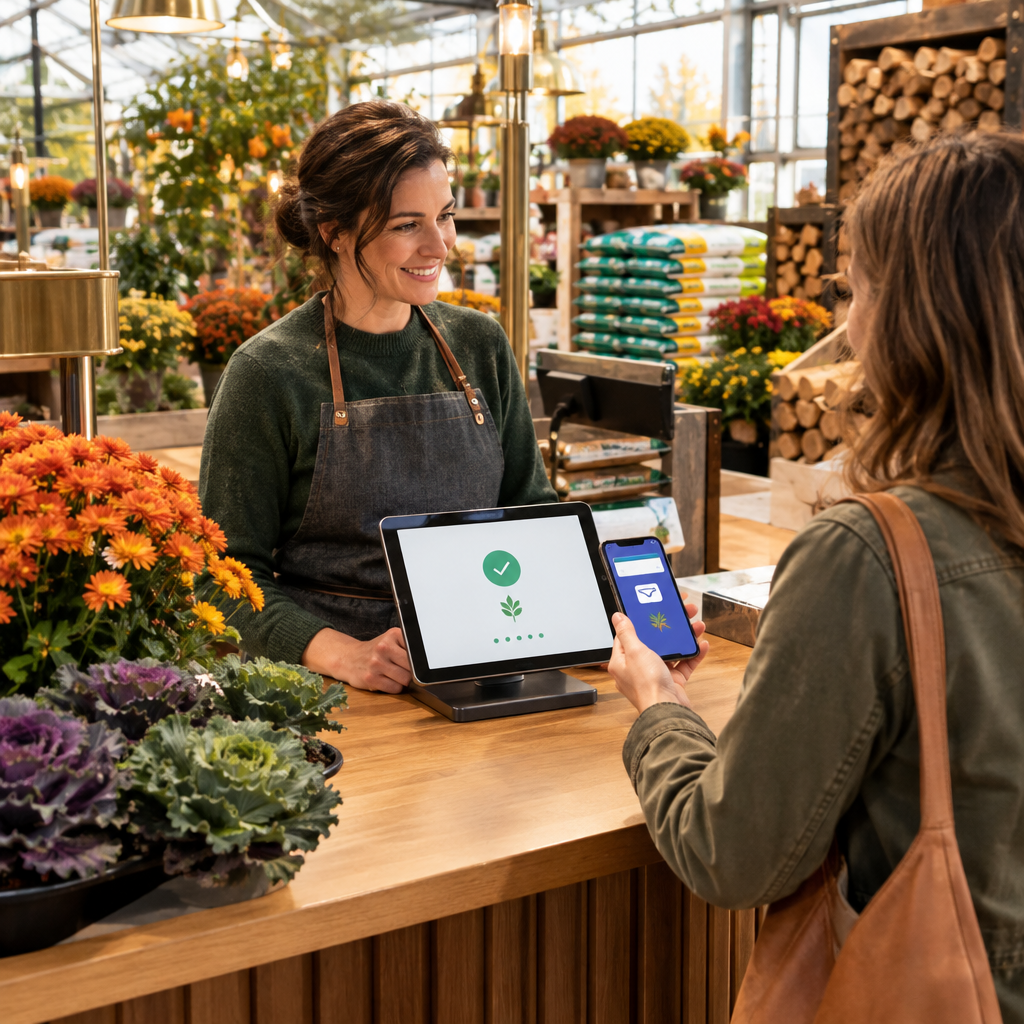
The counter is the highest-conversion opt-in point in a garden center. Place a small tablet near the register with a clear screen: join the garden club, get seasonal reminders, and keep your rewards in your phone. The customer enters a mobile number and taps consent. The system creates a digital wallet pass for Apple Wallet or Google Wallet. The pass holds the customer name, store location, visit count, and current reward progress. Staff can scan the pass at checkout. The tablet records the visit without a paper punch card. For customers who prefer a fast path, print a QR code on the receipt that opens the same opt-in. Add a wallet pass link to spring receipts. The pass stays in the customer phone through summer. In September, the autumn SMS campaign reaches the same customer with a relevant message. Loyalty Nation tracks each visit and updates the pass after checkout. The counter tablet and wallet pass replace lost cards and manual tally sheets. They also give the garden center a clean list for seasonal re-engagement and a simple way to measure store-level return behavior.
Step 4: Schedule SMS Alerts by Weather, Local Events, and Stock Drops
Timing decides whether an SMS produces a visit. Build autumn sends around local conditions. A cool, dry weekend supports mulch and firewood promotions. A rainy week supports indoor workshops, houseplant care, and soil amendment planning. A local fall festival supports porch display bundles. A stock drop supports a same-day or weekend alert. Use store-level send times. Most garden center customers plan visits in the morning or early afternoon. Test two windows: Thursday afternoon for weekend planning and Saturday morning for same-day traffic. Keep each message under 160 characters with a clear store address or link. Include opt-out language in the first message and at a regular cadence. The weekday-trigger logic in Cinema Loyalty Marketing: Automating Tuesday Foot Traffic via SMS applies to garden center quiet days: move a proven weekday offer into a weather-relevant autumn send. Track visits within seven days. Adjust the next send by store and segment.
Step 5: Train Staff on Counter-Speed Scripts and In-Store Handoffs
Front-counter speed protects the campaign. Give cashiers a one-line script: If you want seasonal plant reminders and reward updates, enter your mobile number here. The tablet handles consent. The cashier does not read a long explanation. During autumn, add a handoff at checkout: Your wallet pass has a bulb and soil offer for this week. It is ready at the counter. Staff can scan the pass or look up the customer profile. Place autumn displays near the register with the same products named in the SMS. The customer sees the message, enters the store, and finds the item without asking for help. Managers should review daily redemptions during the first two weeks. Fix product placement and staffing before the next send. For appointment-style services such as landscape consults, potting workshops, or holiday porch design sessions, use the reminder timing in Barbershop Client Retention: Automated SMS Appointment Recalls to reduce no-shows and keep the counter line moving.
Step 6: Measure Repeat Visits and Adjust Campaign Windows
Measure the campaign by store visit, not by message open. Set a visit window for each SMS: seven days for a stock drop, fourteen days for a seasonal offer, and thirty days for a workshop. Match the customer phone number or wallet pass ID to a checkout transaction. Report four numbers: send volume, redemption rate, repeat visit rate, and average basket size. Compare spring buyers who received the autumn SMS with a control group that did not. Review results by store, product segment, and send window. A garden center with three locations may find that the north store responds to firewood on Thursday and the south store responds to soil amendments on Saturday. Adjust the schedule. Keep messages tied to current inventory. Retire offers that do not produce visits. Build the next season with the same data: holiday greens, winter houseplant care, and spring seed starting. The campaign creates a repeatable calendar for foot traffic.
Next Steps & Implementation
Launch the first autumn SMS campaign with a clean spring buyer segment, a counter tablet opt-in flow, and a wallet pass that staff can scan. Set store-level send windows around weather and inventory, then measure redemptions inside a fixed visit window. Review results weekly and move the strongest offers into the next seasonal cycle.
Turn spring buyers into autumn repeat visits. Connect with Loyalty Nation to set up your seasonal SMS re-engagement campaign and track store-level return rates.
