Table of Contents
- Quick Answer
- The Core Challenge
- The Step-by-Step Solution
- Step 1: Map Morning Traffic and Margin
- Step 2: Set Double-Point Windows Around Real Ticket Patterns
- Step 3: Deploy Counter Tablets and Wallet Passes for Fast Check-In
- Step 4: Automate Morning Nudges with Visit-Gap Triggers
- Step 5: Train Staff on a 5-Second Morning Script
- Step 6: Measure Repeat Visit Rate, Not Just Redemptions
- Next Steps & Implementation
Quick Answer
Juice bars and smoothie counters optimize double-point morning hours by assigning bonus points only to a defined off-peak window, tracking check-ins on counter tablets or wallet passes, and pairing that window with automated foot traffic re-engagement and win-back messaging for customers with rising visit gaps. The result is a measurable lift in repeat morning transactions while full-price commuter demand keeps its normal margin.
The Core Challenge
A morning lull at a juice bar is rarely an empty store. It is labor, cut fruit, yogurt, cold-press bottles, and blender capacity sitting against low transaction counts between the commuter rush and the lunch build. A store can have a line at 8:15 and a quiet counter at 10:00, yet the staffing plan, prep list, and loyalty promotion often treat the whole morning as one block. Paper punch cards make the problem harder: customers forget them, cashiers lose track of punches, cards clutter the counter, and the owner gets no usable visit data. A blanket discount also trains customers to wait for markdowns and erodes margin on customers who would have paid full price.
The operational pain point sits at checkout. A smoothie counter moves on speed: take the order, confirm modifiers, process payment, start the blender, hand off the cup. Any loyalty step that requires an app download, a long phone lookup, or a manual punch slows the line and gets skipped during a rush. The bigger revenue leak is the visit gap. A weekday commuter who misses two mornings can disappear for a month, and the store has no trigger to bring that customer back before the habit breaks. The fix is a time-bound bonus, fast counter check-in, and automated re-engagement tied to real visit patterns.
The Step-by-Step Solution
Run the promotion as a controlled pilot: one morning window, one reward structure, one store or one location group, and a clean baseline from the prior four weeks. Keep the counter workflow fast, then review repeat visit data before expanding the window.
Step 1: Map Morning Traffic and Margin
Start with POS data by 30-minute block from 7:00 to 12:00 for four weeks. Identify the low transaction block that still has acceptable gross margin and available blender capacity. Record average ticket, modifier attach rate, labor hours, and prep waste. Segment morning customers into commuters, gym traffic, office workers, students, and walk-in neighborhood traffic. Use loyalty check-in data to calculate the normal gap between morning visits for each segment. Set a clear pilot goal, such as a 12 percent lift in transactions from 9:30 to 11:30 while holding gross margin after point liability at or above the current baseline.
Step 2: Set Double-Point Windows Around Real Ticket Patterns
Configure a simple base rule: one point per dollar. Inside the morning window, apply two points per dollar from Monday through Friday, 9:30 to 11:30. Cap bonus points per visit at a sensible level, such as 20 points, and exclude catering and delivery orders. Keep redemption easy at the counter: 50 points for a five-dollar reward or 25 points for a high-margin add-in. Set a 60-day expiration so points create a return reason. Apply the multiplier only inside the window and keep peak commuter hours at the base rate. Pattern-based SMS scheduling, such as Cinema Loyalty Marketing: Automating Tuesday Foot Traffic via SMS, gives a working model for naming the slow daypart, sending the reminder before it starts, and keeping the offer tied to that window.
Step 3: Deploy Counter Tablets and Wallet Passes for Fast Check-In
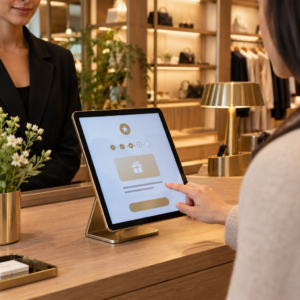
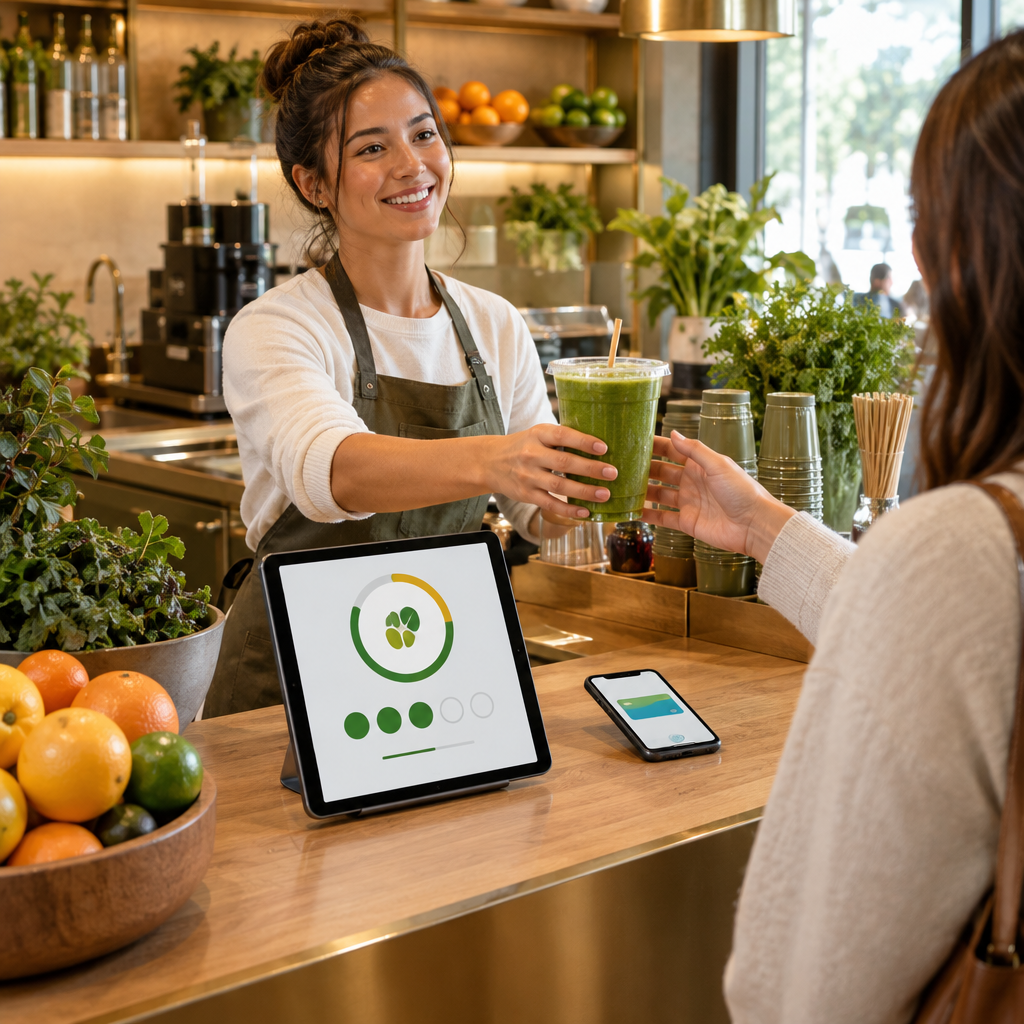
Place a tablet at the counter angled toward the customer. The cashier asks for a phone number or the customer taps a wallet pass QR code. The system logs the visit and shows the current point balance in seconds. No app download is required. Digital passes stored in Apple Wallet and Google Wallet update when the bonus window is active, so regulars see the promotion when they open their phone. Keep a receipt QR code as a backup when the line is long. Staff should prompt once, complete the check-in, and move to the next order. For multi-location operators, centralize the point rules and let each store manage local redemption inventory.
Step 4: Automate Morning Nudges with Visit-Gap Triggers
Use visit-gap triggers rather than broad blasts. If a customer normally visits every five mornings and has no check-in by day nine, send a wallet notification or SMS on Monday at 7:45 AM: Double points until 11:30 today. Segment by favorite item and morning time block. Cap sends at one per customer every 10 days to protect the list. The recall logic used in Barbershop Client Retention: Automated SMS Appointment Recalls translates well to juice bars: detect the lapse, name the reason to return, and make the next step easy. Juice bars do not need appointments for this trigger; they need a clean visit-gap rule and timely send.
Step 5: Train Staff on a 5-Second Morning Script
Give the team one script at order or payment: I can add double points to your smoothie before 11:30. Ask once, scan or enter the phone number, and keep the line moving. Position the tablet so the customer can see the point confirmation. Include the morning goal in the daily huddle, review current check-ins at the start of the shift, and coach one add-in suggestion tied to the reward. Keep incentives team-based so the counter does not push loyalty at the expense of order speed. The check-in should feel like part of payment, not a separate task.
Step 6: Measure Repeat Visit Rate, Not Just Redemptions
Track bonus-window transactions per day, unique customers, 30-day and 60-day repeat visit rate, average ticket, modifier attach rate, redemption rate, and gross margin after point liability. Compare the pilot store against a control store or a clean prior-period baseline. Review total day sales to catch pull-forward, where a customer shifts from 8:30 to 10:30 without adding a visit. Adjust the window by 15-minute increments and test reward costs. A promotion that lifts redemptions but lowers repeat visits or margin after points is not working. The useful signal is incremental morning traffic that comes back after the bonus ends.
Next Steps & Implementation
Pick one morning window and one reward, configure the tablet and wallet pass, then run a 14-day pilot against a clean baseline. Review repeat visit rate, gross margin after point liability, and staff check-in speed every Monday; expand the window only when the data shows incremental morning transactions.
Ready to test a double-point morning window? Review Loyalty Nation foot traffic triggers and map the first pilot.